

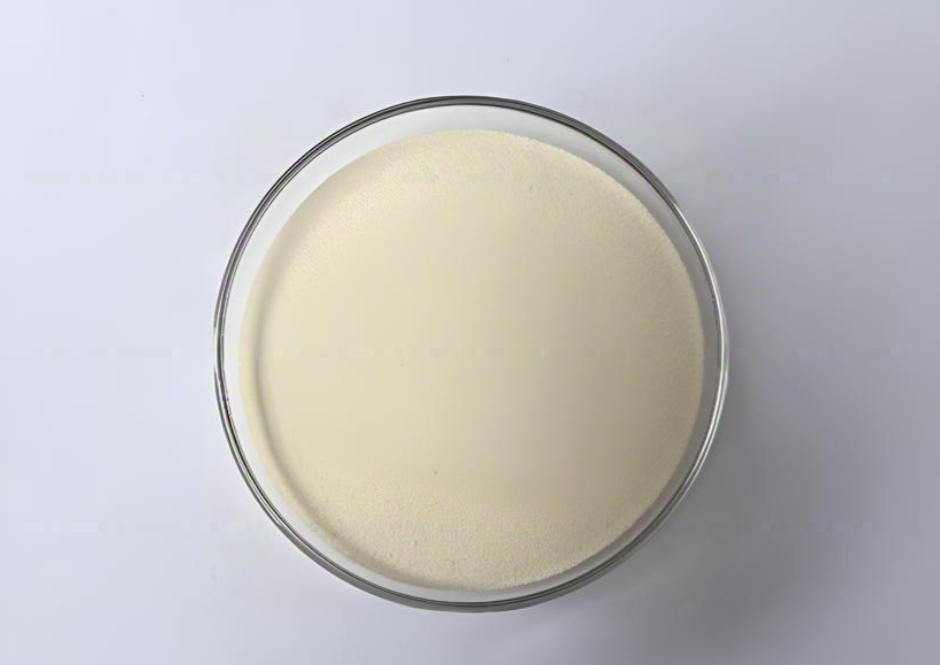
Nano-scale Poly(methyl methacrylate) (PMMA)
 Product Introduction
Product NameNano-scale Poly(methyl methacrylate) (PMMA)CAS110-27-0Quality Standa
- Model:
- Update Time:2025-12
- Manufacturer Type:
- Views:
Product Name | Nano-scale Poly(methyl methacrylate) (PMMA) |
| CAS | 110-27-0 |
Quality Standard | Standard |
Product Grade | Cationic Emulsifiers |
Place of Origin | China |
Dangerous Goods | No |
Nano-scale poly(methyl methacrylate), often referred to as nano-PMMA, is a type of thermoplastic polymer material composed of methyl methacrylate monomer polymerized into particles with sizes typically ranging from tens to hundreds of nanometers. It inherits the excellent optical clarity, good chemical resistance, and favorable mechanical properties of bulk PMMA while gaining distinct advantages from its nanoscale size, such as a significantly high specific surface area, excellent dispersibility, and easy surface functionalization. Nano-PMMA can exist in forms like nanoparticles, nanospheres, and nanocapsules, and its surface can be modified with various functional groups to meet diverse application requirements in different fields. It is widely recognized for its biocompatibility, low cytotoxicity, and stable physical and chemical properties, making it a versatile material across multiple industries.
Key Functions and Applications
Biomedical and Pharmaceutical Uses: Nano-PMMA has become a promising candidate in drug delivery systems. Its high specific surface area allows for efficient loading of small-molecule drugs, proteins, or nucleic acids, and its nanoscale size enables easy internalization by cells, facilitating targeted drug delivery and improving therapeutic efficacy. It can also be modified with fluorescent dyes to serve as probes for cell imaging and biological tracking, and act as standard particles for calibration in electron microscopy and dynamic light scattering analysis. In orthopedics, it is used to enhance the mechanical properties of bone cements for joint replacement surgeries. Additionally, it can function as scaffolds in tissue engineering to support cell growth during reconstructive procedures.
Optical and Photonic Applications: Thanks to its outstanding optical transparency and the ability to regulate light propagation, nano-PMMA is applied in preparing optical films, light diffusers, and transparent polymer composites to optimize refractive index matching. It can also be used as building blocks for fabricating photonic crystals and nanostructures, which are essential in advanced optical devices and display technologies. Moreover, it is employed in the production of anti-counterfeiting inks and wearable optical devices when combined with functional materials to achieve thermochromic or fluorescent effects.
Cosmetics and Personal Care: Nano-PMMA particles are used as mild abrasives in facial scrubs and exfoliating products due to their spherical shape and appropriate hardness, enabling gentle removal of dead skin cells without damaging the skin surface. They also serve as texture modifiers in cosmetics, enhancing the spreadability and wear resistance of foundations, lotions, and other products, while contributing to a smooth and matte finish.
Material Modification and Industrial Applications: When added as a nanofiller to polymers, coatings, or adhesives, nano-PMMA can significantly improve the mechanical properties, such as impact resistance and scratch resistance, of the base materials, as well as enhance their optical transparency and weatherability. In electronics, it is used in the manufacturing of nanofluidic chips and lab-on-a-chip devices, leveraging its good processability and optical clarity for precise fluid control and real-time optical detection. It also finds use in the production of high-performance coatings for automotive and electronic components, providing protection and improving surface aesthetics.