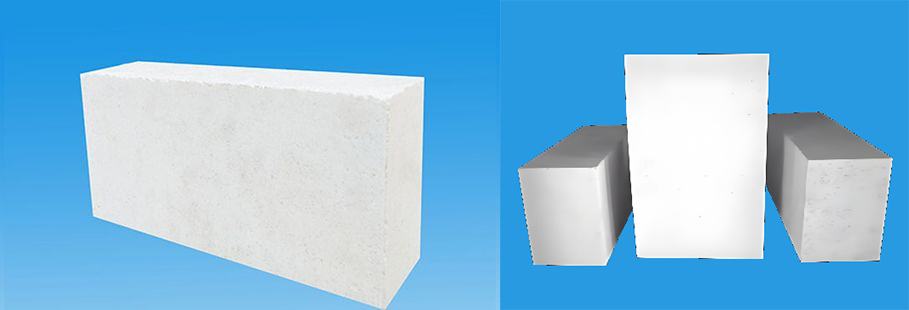

The different alumina (Al2O3) content in alumina-based refractories determines their varying stress intensities. Studies on the erosion and thinning resistance of MgO-based spinel and Al₂O₃-based spinel refractories have shown that both are more suitable for alkali recovery boilers with minimal thinning, whereas chromium-containing refractories exhibit relatively noticeable thinning. Using pure calcium aluminate cement as a binder, mullite refractories were produced with raw materials such as high-grade bauxite clinker, flint clay, and dense fused corundum. Lightweight castables prepared with high-alumina cement as a binder and crushed lightweight brick particles as the main raw material can be used for insulation in incinerators. Research has found that adding Cr₂O₃ or using pre-reacted chrome-corundum particles to produce chrome-corundum products containing 5% Cr₂O₃ results in high erosion resistance.

Using MgO and NiO as additives, a type of Al₂O₃-MgO-NiO refractory was developed and tested for slag erosion and thinning resistance in comparison with chromium-containing refractories. It was found that its anti-slag erosion and thinning effects were similar to those of Al₂O₃-Cr₂O₃ refractories containing 30% chromium oxide. The resistance to HCl erosion and slag corrosion of alumina-based refractories was studied, and the erosion mechanism of alkaline slag was analyzed. Experiments revealed that under air conditions, a glass phase of alkaline oxides formed on the surface of alumina-based refractories. Considering the environmental pollution risk of chromium-containing materials, Y₂O₃ was introduced into high-alumina castables. The erosion resistance of this new high-alumina castable before and after sintering under slag erosion conditions was analyzed in terms of flexural strength and compared with traditional Al₂O₃-Cr₂O₃ castables. The results showed that the dense protective layer formed by the reaction of Al₂O₃ and Y₂O₃ prevented slag penetration, thereby protecting the refractory and resulting in superior slag erosion resistance.