

Current Application Status and Dosage Standards of International Cosmetic Moisturizing Ingredients
I. Current Application Status and Dosage Standards of International Cosmetic Moisturizing Ingredients
(1) Differentiation of Core Categories in Application Scenarios
The global moisturizing ingredients market is characterized by bio-based dominance and functional segmentation, with a market size exceeding RMB 120 billion in 2025 and a compound annual growth rate (CAGR) of 8.3%. Mainstream categories have formed clear scenario differentiations based on the gradient moisturizing needs of "moisture absorption - moisture locking - repair", while integrating the new trends of green innovation and precise targeting.
Hygroscopic Ingredients: Glycerin, as a basic moisturizing component, is widely applicable to mass skincare products such as lotions (addition level: 5%-15%) and facial masks (addition level: 3%-8%). Its bio-based alternatives (e.g., sugarcane-fermented glycerin) have achieved a penetration rate of nearly 60% in mass skincare products by 2025, thanks to their environmental protection and stability advantages. Hyaluronic acid is moving towards precision grading, with molecular size customization realized through enzymatic hydrolysis technology. Macromolecular components (≥2200kDa) are used for surface moisture locking, while small-molecular components (≤200kDa) are suitable for deep penetration in serums, with an addition level usually ranging from 0.1% to 1.0%. The total content of multi-level compound hyaluronic acid can reach 4.8%, enabling 72-hour long-lasting moisturization. It is worth noting that bio-based hyaluronic acid, produced from circular economy by-products, reduces carbon footprint by 62% compared with traditional processes, making it a new favorite of high-end brands.
Occlusive Ingredients: Synthetic squalane, with a structural similarity of up to 90% to human sebum, has become a core component of high-end anti-aging creams. An addition level of 8%-20% can form a dense moisture-locking film, reducing transepidermal water loss (TEWL) by over 40%. Hydrogenated polyisobutylene is applied in a graded manner according to skin feel requirements: the lightweight type (PIB 1050) is added at 2%-15% for serums, while the rich type (PBB 135100) is used at 10%-40% for lip masks and high-coverage cosmetics, balancing moisturizing effect and user experience. Plant-derived occlusive ingredients are emerging simultaneously. Bionic oleosin prepared by solid-phase synthesis and molecular ligation technology can achieve the dual effects of "long-lasting moisture locking + cellular energy supply" when added at 3%-10% in essential oils.
Repairing Ingredients: Ceramide compound systems have become the standard for sensitive skin care, requiring an effective content of 0.3%-1% combined with cholesterol and fatty acids to form a lipid closed loop. A single component content below 0.1% will make it difficult to exert the barrier repair effect. Panthenol (Vitamin B5) is added at 1%-5% in medical dressings, driving the demand growth rate of moisturizing ingredients in the medical aesthetics field to exceed 18%. Its microbially synthesized varieties are gradually replacing traditional process products due to their purity advantages. Innovative repairing ingredients have achieved targeted breakthroughs. For example, Helichrysum italicum extract strengthens collagen anchoring by activating β1 integrin expression. Adding 0.5%-2.0% of it in eye creams can improve periorbital barrier damage, filling the global gap in dermal-epidermal junction (DEJ) targeted repair ingredients.
(2) Regional and Functional Differences in Dosage Standards
Function-oriented Dosage: In basic moisturizing products, the classic combination of glycerin and hyaluronic acid accounts for 10%-20% of the formula. For precision repair products such as barrier repair creams, the proportion of ceramide compound systems can reach 3%-8%, and it needs to be combined with auxiliary ingredients such as phytosterols to improve repair efficiency. The dosage standards for products dedicated to extreme environments are more stringent. For example, in products suitable for desert dry skin, the proportion of occlusive ingredients needs to be increased to more than 25%, and anti-drying actives such as glacier protection protein should be added. The male beauty niche has driven dosage innovation. In oil-controlling moisturizing products, the proportion of hygroscopic ingredients is reduced to 8%-15%, while 0.1%-0.3% of oil-controlling actives are compounded to balance skin feel.
Regulation-constrained Dosage: After the revision of the EU Cosmetics Regulation, some synthetic moisturizers have been restricted, requiring that the carbon footprint of raw materials be included in the declaration system. China's 2024 edition of the Safety and Technical Standards for Cosmetic Ingredients has raised the heavy metal residue standard to 0.1ppm, forcing the industry to upgrade purification processes. Japan has implemented stricter ingredient limit standards for sensitive skin products, requiring the content of irritating moisturizing ingredients to be below 0.01% and passing patch tests on 6 types of skin. The North American market has added the "environmental impact labeling" requirement, mandating that the source and production energy consumption of raw materials be publicly traceable, which directly affects the dosage proportion of high-energy-consuming synthetic raw materials.
II. Global Import Trade Pattern of Moisturizing Ingredients
(1) International Import Flow and Product Category Structure
The global import of moisturizing ingredients shows distinct characteristics of high-end dependence and regional concentration, with the Asia-Pacific region becoming the core trade hub with a market share of over 40%.
Major Import Sources: Germany occupies a core position with its high-end formulation technology, and its high-end products such as liposome-encapsulated VC derivatives and sustained-release moisturizers are mainly exported to emerging markets such as India and Malaysia. China mainly exports basic raw materials and bio-based ingredients. Categories such as hyaluronic acid and polyglutamic acid cover supply chains in Southeast Asia, Europe, America and other regions, among which hyaluronic acid exports account for 70% of the global share. Southeast Asian countries such as Malaysia focus on supplying plant-based glycerin, and the export volume of related products increased by 15% year-on-year in 2025. Relying on its natural raw material advantages, France mainly supplies organic rose moisturizing extracts to the high-end market, with an import unit price 2-3 times higher than that of ordinary raw materials.
Differentiation of Imported Categories: Developing countries mainly import basic raw materials, focusing on mass-market ingredients such as glycerin and cellulose to meet the production needs of local mass skincare products. European and American markets are highly dependent on the import of high-end formulations. China's import volume of high-end moisturizing formulations still maintains a growth rate of 9%, mainly purchasing sustained-release technology products and liposome-encapsulated raw materials from Germany and the Netherlands. Markets such as Canada and Japan have a strong demand for efficacy-verified raw materials, requiring imported products to pass special tests such as 72-hour moisturizing rate and sensitive skin irritation rate. The import of sustainable raw materials has achieved significant growth. In 2025, the global import volume of bio-based moisturizing ingredients increased by 22% year-on-year, of which the EU accounted for 45%.
(2) Trade Barriers and Regional Adjustments
International trade frictions are promoting the restructuring of the regional trade pattern. The EU's anti-dumping investigation into Chinese glycerin derivatives has prompted the export focus of related categories to shift to Southeast Asia, with China's glycerin export volume to ASEAN increasing by 30% year-on-year in 2025. At the same time, the Regional Comprehensive Economic Partnership (RCEP) agreement promotes the mutual recognition of standards in the Asia-Pacific region, reducing the trade cost of moisturizing ingredient-related categories by 12%-15% and accelerating the integration of regional supply chains.
The trend of supply chain localization is obvious. Multinational enterprises enter emerging markets through technical cooperation, such as L'Oréal establishing a green raw material procurement base in China to drive the export of local bio-based raw materials. Local manufacturers expand into incremental markets such as the Middle East and Africa through cross-border e-commerce, increasing the average export price of basic moisturizing raw materials by 5%-8%. Green trade barriers are emerging. The EU has incorporated EcoVadis scores into supplier assessment, and raw material enterprises that fail to reach Grade B will be restricted from import, forcing export enterprises to accelerate low-carbon transformation.
III. Development Status of China as a Core Raw Material Supplier
(1) Supply Scale and Global Position
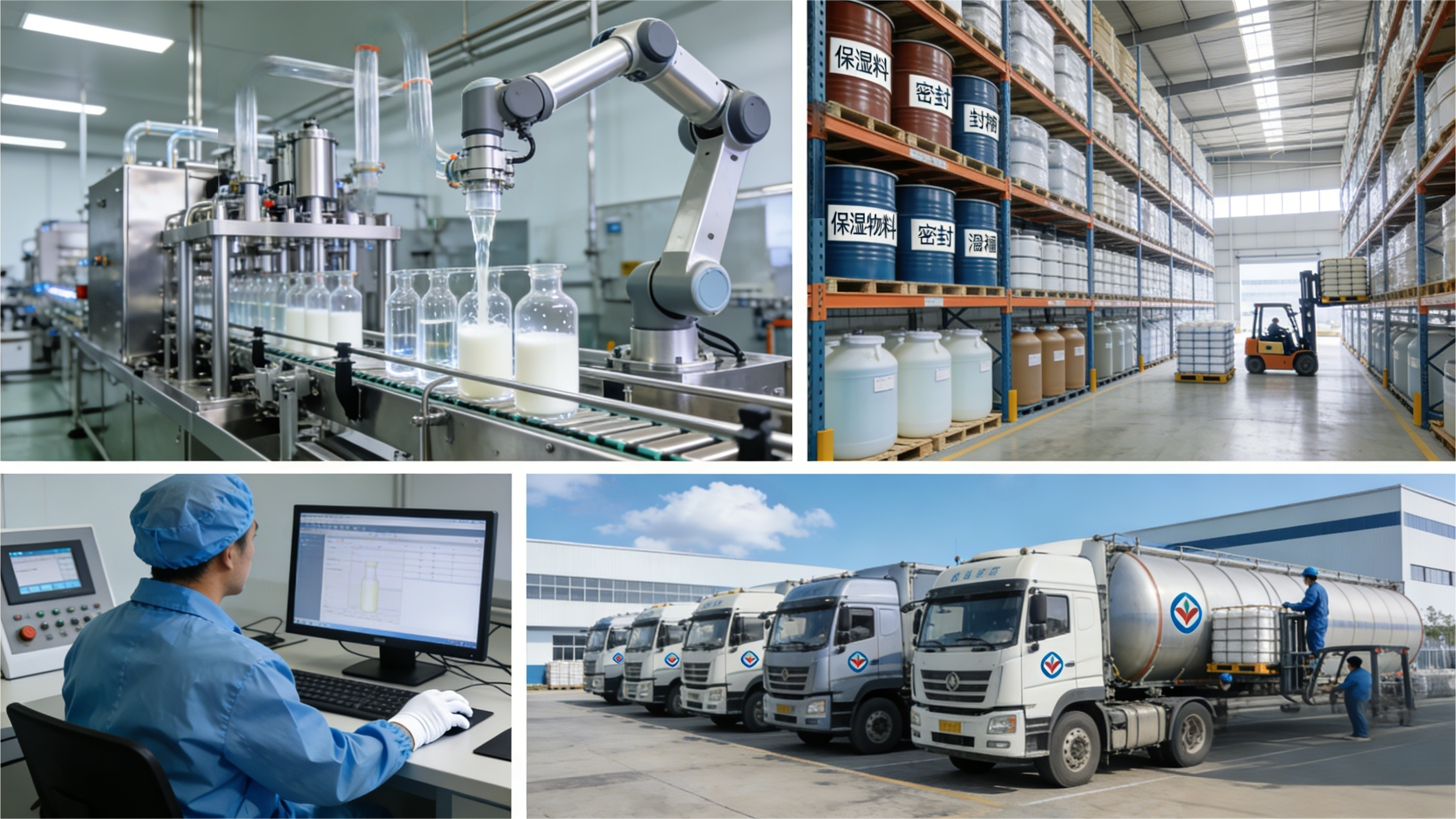
China has become a "stabilizer" in the global supply of moisturizing ingredients, accounting for 35% of the global market share in 2025. Domestic production capacity accounts for more than 65% of the world's total, and the import dependence rate has dropped to 12%.
The industrial cluster effect has been further strengthened. Shandong has formed a complete industrial chain cluster of hyaluronic acid, covering raw material R&D, fermentation and purification, application testing and other links. The Guangdong-Hong Kong-Macao Greater Bay Area has established cross-border technology transformation pilot projects to promote the industrialization of bio-based moisturizing raw materials, with the output value of related industries exceeding RMB 50 billion in 2025. Polyglutamic acid has achieved cost optimization through bio-fermentation technology, with an export unit price 30% lower than that of similar Japanese products, and a penetration rate of over 40% in the Southeast Asian market. The layout of green production capacity is accelerating. Leading domestic enterprises have built fully hydropower-driven raw material factories, reducing carbon dioxide emissions by more than 10,000 tons annually. Their products have obtained EU green certification, with a premium space of up to 15%.
(2) Technological Breakthroughs and Compliance Upgrades
Improvement of Innovation Capability: Synthetic biology technology has achieved mass production breakthroughs of key raw materials. The purity of repairing raw materials such as asiaticoside reaches 99.2%, and the fermentation cycle is shortened to 72 hours. Progress has been made in liposome encapsulation technology, reducing the room-temperature decomposition rate of VC derivatives from 30% to below 5%. The penetration rate of 32nm-level microvesicle products is 2.7 times higher than that of ordinary raw materials. China leads the world in the R&D of bio-based raw materials. The technical maturity of microbially synthesized panthenol, enzymatically prepared hyaluronic acid and other technologies is at the forefront of the world, supporting the upgrading of product environmental attributes. Bionic synthesis technology has achieved a "from 0 to 1" breakthrough. Oleosin raw materials prepared by solid-phase synthesis and molecular ligation technology have applied for a number of invention patents, breaking the international monopoly.
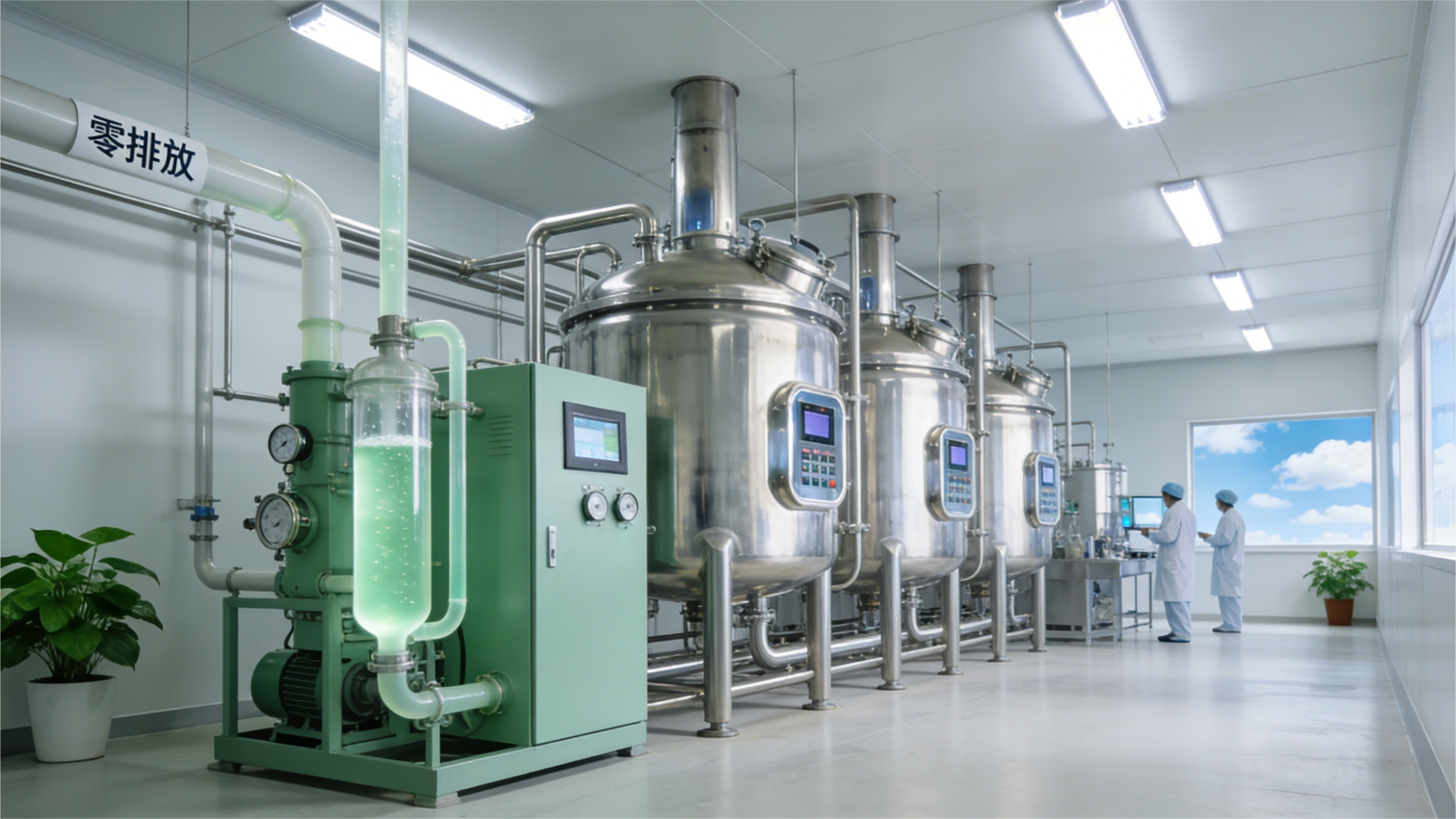
Global Compliance Layout: Leading suppliers have generally passed the triple certifications of the U.S. Food and Drug Administration (FDA), Registration, Evaluation, Authorization and Restriction of Chemicals (REACH), and National Medical Products Administration (NMPA). Their products comply with regional standards such as EU Cosmetic Ingredient Review (CIR) and Japan Pharmaceuticals and Medical Devices Agency (PMDA). They have performed outstandingly in special tests such as extreme environment adaptability and sensitive skin safety, and have stably entered the international high-end cosmetic supply chain. A flexible production system has been established to adapt to differences in regional regulations, which can quickly meet special requirements such as EU heavy metal limits and North American environmental labels. By participating in EcoVadis and Carbon Disclosure Project (CDP) ratings, more than 95% of leading enterprises have met the international supply chain access standards, and the carbon emission reduction of the supply chain has decreased by 28% compared with 2020.