

Refractory materials are essential industrial materials designed to withstand high temperatures, chemical erosion, and mechanical wear in extreme environments. They play a pivotal role in industries such as metallurgy, petrochemicals, cement production, and glass manufacturing. Based on different classification criteria, refractory materials can be divided into various types, each with unique properties and application scenarios.
Classification of Refractory Materials
1. Classification by Chemical Composition
Acidic refractory materials: Mainly composed of silica (SiO₂), such as silica bricks and quartzite. They have good resistance to acidic slags and gases but are easily corroded by alkaline substances.
Basic refractory materials: Dominated by oxides like magnesia (MgO) and calcium oxide (CaO), including magnesia bricks and dolomite bricks. They excel in resisting alkaline slags, making them suitable for high-temperature environments with alkaline media.
Neutral refractory materials: Composed of substances that are inert to both acidic and basic media, such as alumina (Al₂O₃), chromia (Cr₂O₃), and carbonaceous materials. Common examples include corundum bricks, chrome bricks, and graphite bricks.
2. Classification by Refractoriness
Ordinary refractory materials: Refractoriness ranges from 1580°C to 1770°C, widely used in general high-temperature equipment with moderate temperature requirements.
High-grade refractory materials: Refractoriness is between 1770°C and 2000°C, suitable for equipment operating under higher temperature conditions, such as blast furnace linings.
Ultra-high-temperature refractory materials: Refractoriness exceeds 2000°C, mainly used in extreme temperature environments like rocket nozzles and nuclear reactor linings.
3. Classification by Form
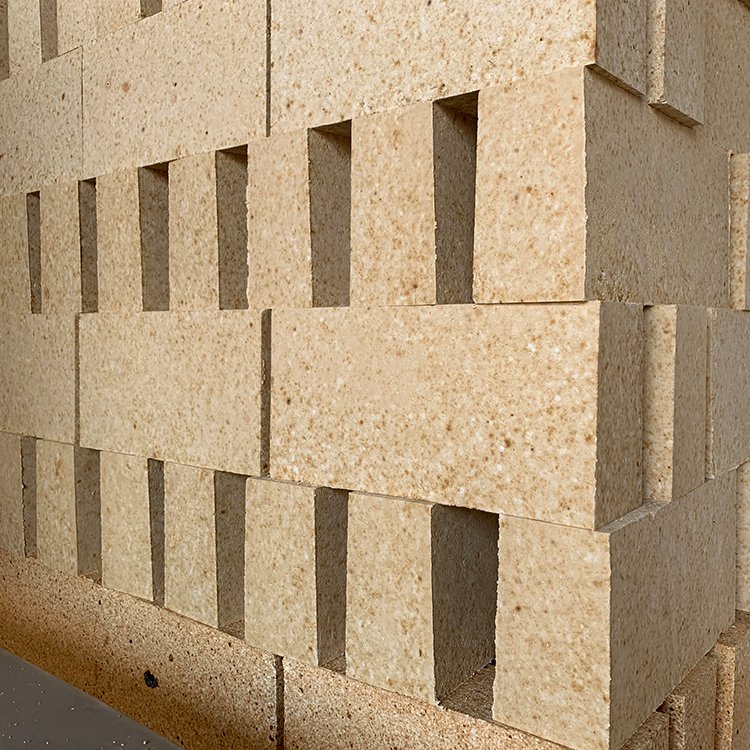
Shaped refractory materials: Pre-formed products with fixed shapes, such as bricks, blocks, and tubes. They are convenient for construction and widely used in industrial furnaces and kilns.
Unshaped refractory materials: Also known as monolithic refractories, including castables, ramming mixes, and coatings. They have strong adaptability and can be applied to irregular structures or as linings for complex-shaped equipment.
Applications of Refractory Materials
1. Metallurgical Industry
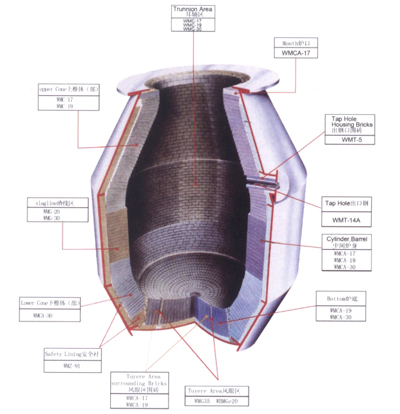
This is the largest consumer of refractory materials. Basic refractory materials like magnesia bricks are used in converter linings and ladles to resist molten steel and alkaline slags. Neutral corundum bricks and graphite bricks are applied in blast furnaces, electric arc furnaces, and tundishes, ensuring stable operation under high temperatures and mechanical impact. Acidic silica bricks are used in coke ovens due to their good thermal stability.
2. Petrochemical Industry
Refractory materials are used in catalytic crackers, reformers, and industrial boilers. Unshaped refractory castables are widely used for lining reaction vessels and pipelines, as they can effectively resist high-temperature flue gases and chemical corrosion. Neutral refractory materials like alumina-based products are suitable for equipment handling acidic or alkaline media.
3. Cement and Glass Industry
In cement rotary kilns, basic magnesia-chrome bricks and dolomite bricks are used to withstand high temperatures (up to 1600°C) and corrosive cement clinker. In glass melting furnaces, silica bricks and alumina-silica bricks are adopted for their excellent thermal shock resistance and transparency to infrared radiation, ensuring uniform heating of glass melts.
4. Other Industries
In the ceramic industry, refractory materials line kilns for firing ceramics, maintaining stable temperature fields. In the power industry, they are used in boiler furnaces and flue gas treatment equipment. Additionally, ultra-high-temperature refractory materials play a key role in aerospace and nuclear energy fields, such as thermal protection systems for spacecraft.