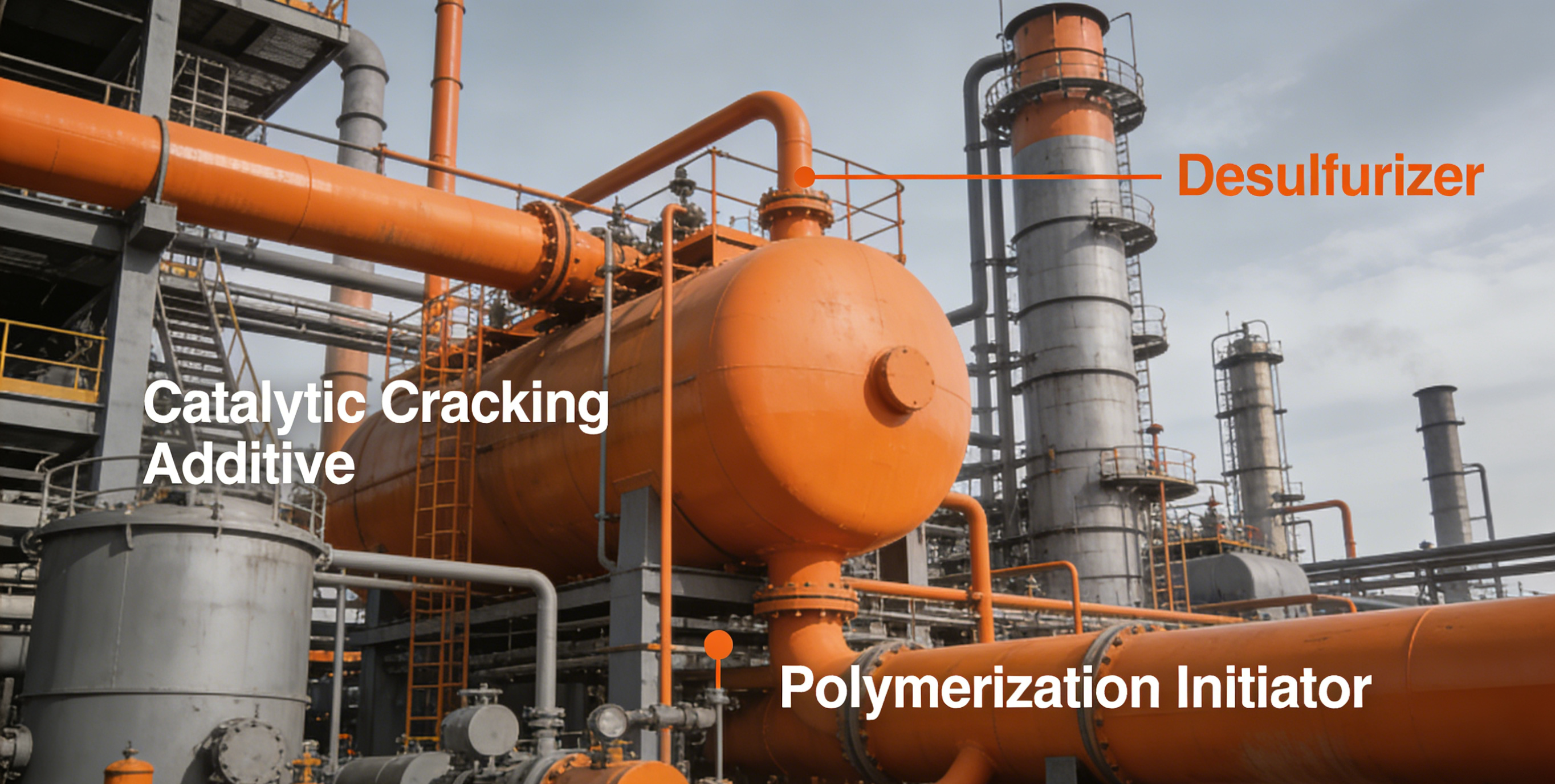

Unlike "petroleum product additives" that are added to end products such as gasoline and lubricating oil, petrochemical production additives are chemical auxiliaries specifically used in the petrochemical production process. They run through the entire industrial chain, including crude oil extraction, oil refining, and chemical synthesis. By regulating reaction efficiency, optimizing product quality, and reducing energy consumption and losses, they help ensure the stable and efficient operation of petrochemical production — acting like "production managers" that solve technical problems in production behind the scenes and ensure each process step meets standards.
For example, preventing wax deposition in pipelines during crude oil extraction, increasing the yield of light oil during refining, and controlling reaction rates during chemical synthesis — all these key links rely on the precise role of petrochemical production additives. Their dosage usually accounts for a few ten-thousandths to a few percent of the processed materials, but their impact on production efficiency and product quality is crucial.
Classification by Production Link: The "Job Division" of Petrochemical Production Additives
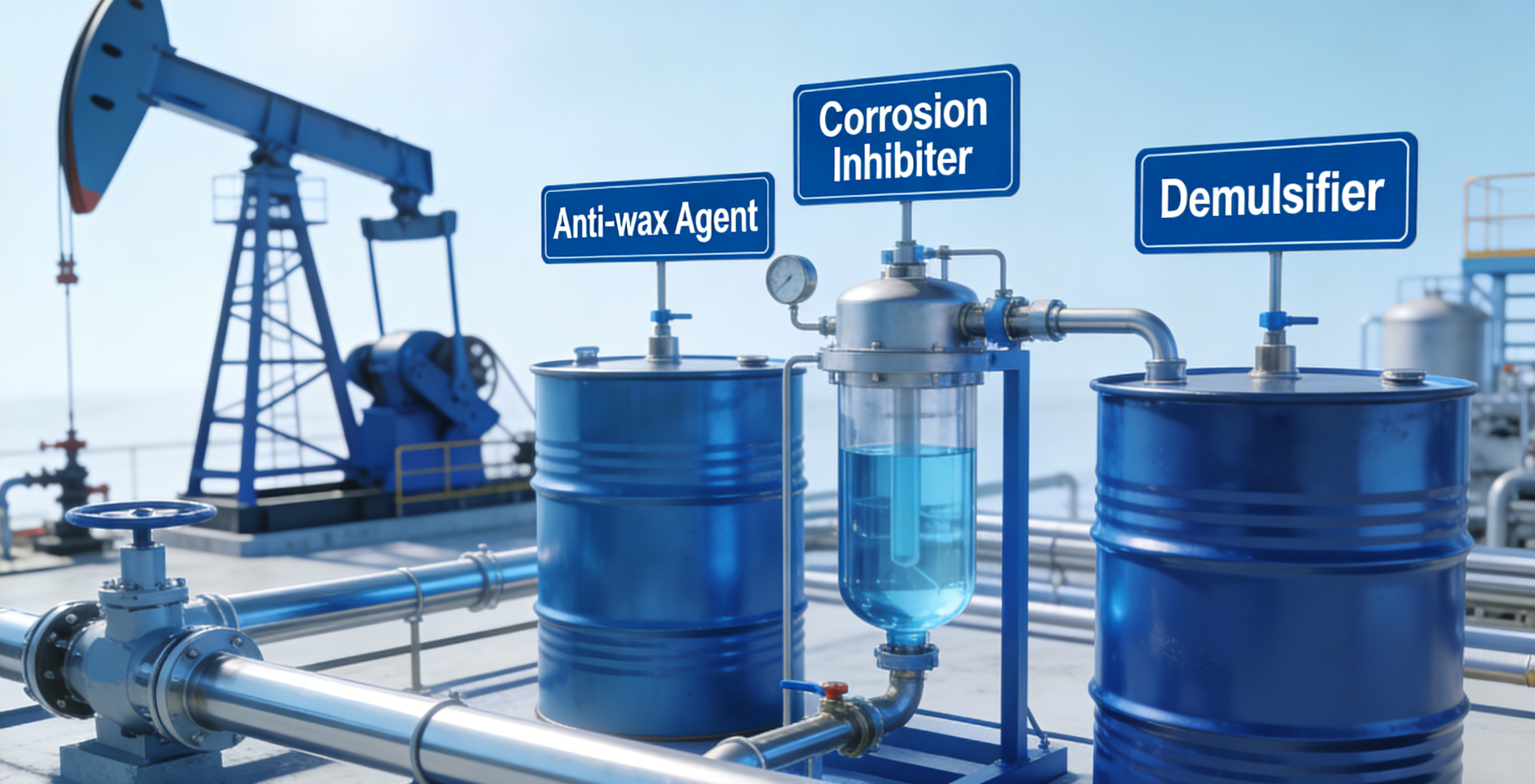
The petrochemical production process is complex, and the demand for additives varies significantly across different links. They can be mainly divided into four categories:
Crude Oil Extraction and Gathering & Transportation Additives: Ensuring "Smooth Sourcing"
During the process of extracting crude oil from underground and transporting it to refineries, problems such as wax deposition, corrosion, and emulsification are likely to occur. This type of additive serves as the "pioneer":
Wax Inhibitors: Inhibit the deposition of wax in crude oil on the inner walls of oil pipes and oil transmission pipelines, prevent pipeline blockage, and maintain the flow rate of crude oil transportation. They are especially suitable for the extraction of high-wax crude oil.
Corrosion Inhibitors: Form a protective film on the inner walls of extraction equipment (sucker rods, oil pipes) and oil transmission pipelines, isolate the corrosion of metals by acidic substances (such as hydrogen sulfide and carbon dioxide) in crude oil, and extend the service life of equipment.
Demulsifiers: During crude oil extraction, formation water mixes with crude oil to form an emulsion. Demulsifiers can quickly destroy the stability of the emulsion, realize oil-water separation, and reduce the processing difficulty of subsequent oil refining processes.
Oil Refining Process Additives: Improving "Refining Efficiency"
Oil refining is the core link in converting crude oil into products such as gasoline, diesel, and kerosene. The role of additives here is to "optimize output":
Catalytic Cracking Additives: Added to catalytic cracking units, they can increase the yield of light oils such as gasoline and diesel (usually by 2%-5%), while reducing coke formation and lowering unit energy consumption — making them one of the key auxiliaries for refineries to improve economic benefits.
Desulfurizers: Adsorb or convert sulfur elements (such as sulfides) in crude oil through chemical reactions, reduce the sulfur content in finished oil to meet environmental standards (e.g., National VI Emission Standards), and reduce sulfur dioxide emissions during combustion.
Desalting Agents: Salts contained in crude oil can corrode oil refining equipment and affect catalyst activity. Desalting agents can combine with salts in the crude oil pretreatment stage and be removed through water washing, "clearing obstacles" for subsequent oil refining processes.
Chemical Synthesis Additives: Regulating "Reaction Rhythm"
In the synthesis process of petrochemical products such as ethylene, propylene, polyethylene, and polypropylene, additives act as "reaction regulators":
Polymerization Initiators: In the polymerization reaction of polymers such as plastics and rubber, they initiate the polymerization of monomers (e.g., ethylene, propylene), control the reaction initiation speed and chain growth process, and ensure that the product molecular weight meets standards and performance is stable.
Polymerization Inhibitors: Some monomers (e.g., styrene, acrylic acid) in chemical synthesis tend to polymerize spontaneously during storage or transportation. Polymerization inhibitors can inhibit this invalid polymerization, prevent monomer deterioration, and ensure the qualification of production raw materials.
Catalyst Promoters: Assist the main catalyst in exerting its effect. For example, in ethylene cracking units, promoters can reduce catalyst coking, extend the service life of the catalyst, and at the same time improve the selectivity of target products such as ethylene and propylene.
Wastewater Treatment Additives: Meeting "Environmental Standards"
Petrochemical production generates wastewater containing oil, heavy metals, and refractory organic substances. This type of additive is an "environmental guardian":
Flocculants: Cause suspended particles and oil droplets in wastewater to aggregate into large flocs, facilitating sedimentation or filtration separation, and reducing wastewater turbidity and oil content.
Decolorants: Remove colored substances (e.g., phenols, dye pollutants) from petrochemical wastewater, improve the appearance of wastewater, and at the same time reduce COD (Chemical Oxygen Demand) to meet wastewater discharge standards.
Core Value of Petrochemical Production Additives: Why Are They Indispensable?
Cost Reduction and Efficiency Improvement: For example, catalytic cracking additives increase the yield of light oil, which can add thousands of tons of output value to large refineries every year; wax inhibitors reduce the frequency of pipeline cleaning and lower equipment maintenance costs.
Ensuring Safety and Stability: Corrosion inhibitors prevent equipment corrosion and leakage, and polymerization inhibitors prevent safety accidents caused by monomer polymerization, reducing production risks from the source.
Meeting Environmental Requirements: Desulfurizers reduce the sulfur content of oil products, and wastewater treatment additives purify sewage, helping petrochemical enterprises meet environmental policy standards and reduce environmental pollution.
Optimizing Product Quality: By regulating the reaction process, the formation of impurities is reduced, ensuring that the indicators (e.g., purity, stability) of finished oil and chemical products meet standards, and enhancing the market competitiveness of products.
Future Development: Greenization and High Efficiency in Parallel
With the tightening of environmental policies and the advancement of the "carbon reduction" goal in the petrochemical industry, petrochemical production additives are upgrading in two main directions:
Green and Environmentally Friendly Type: Research and development of degradable and low-toxicity additives, such as bio-based corrosion inhibitors and phosphorus-free flocculants, to reduce secondary environmental pollution during the production process.
High-Efficiency and Multi-Functional Type: An additive integrates multiple functions, such as the "corrosion inhibition - wax prevention - demulsification" three-in-one auxiliary, which simplifies the addition process, reduces usage costs, and adapts to complex production conditions (e.g., deep-sea crude oil extraction, high-acid crude oil refining).
From crude oil extraction to the delivery of chemical products, petrochemical production additives do not directly face consumers, but they are the key support for the "stable and strong chain" of the petrochemical industry chain. Their technological progress also promotes the petrochemical industry to develop in a more efficient, environmentally friendly, and economical direction.