

Petroleum Explosion Suppressants: Global Application, Market Demand and Future Trends
Petroleum explosion suppressants are essential safety materials used to reduce the risk of explosions and mitigate the damage caused by explosive incidents in petroleum exploration, production, storage, transportation and processing. With the increasing emphasis on industrial safety worldwide and the continuous expansion of the global petroleum industry, these suppressants have been widely applied across different regions and industrial links.
In terms of global application, petroleum explosion suppressants have formed a comprehensive application system covering the entire industrial chain of the petroleum industry. In the upstream petroleum exploration and production links, they are mainly used in oil wells, drilling platforms and related equipment to prevent explosions caused by the leakage of flammable gases such as natural gas and the accumulation of oil vapor.
This is particularly important for offshore oil platforms and high-pressure oil and gas wells, where the harsh working environment and high risk of leakage make petroleum explosion suppressants an indispensable safety guarantee. They can quickly inhibit the spread of flame and the propagation of explosion waves when a potential explosion risk occurs, ensuring the safety of personnel and equipment.
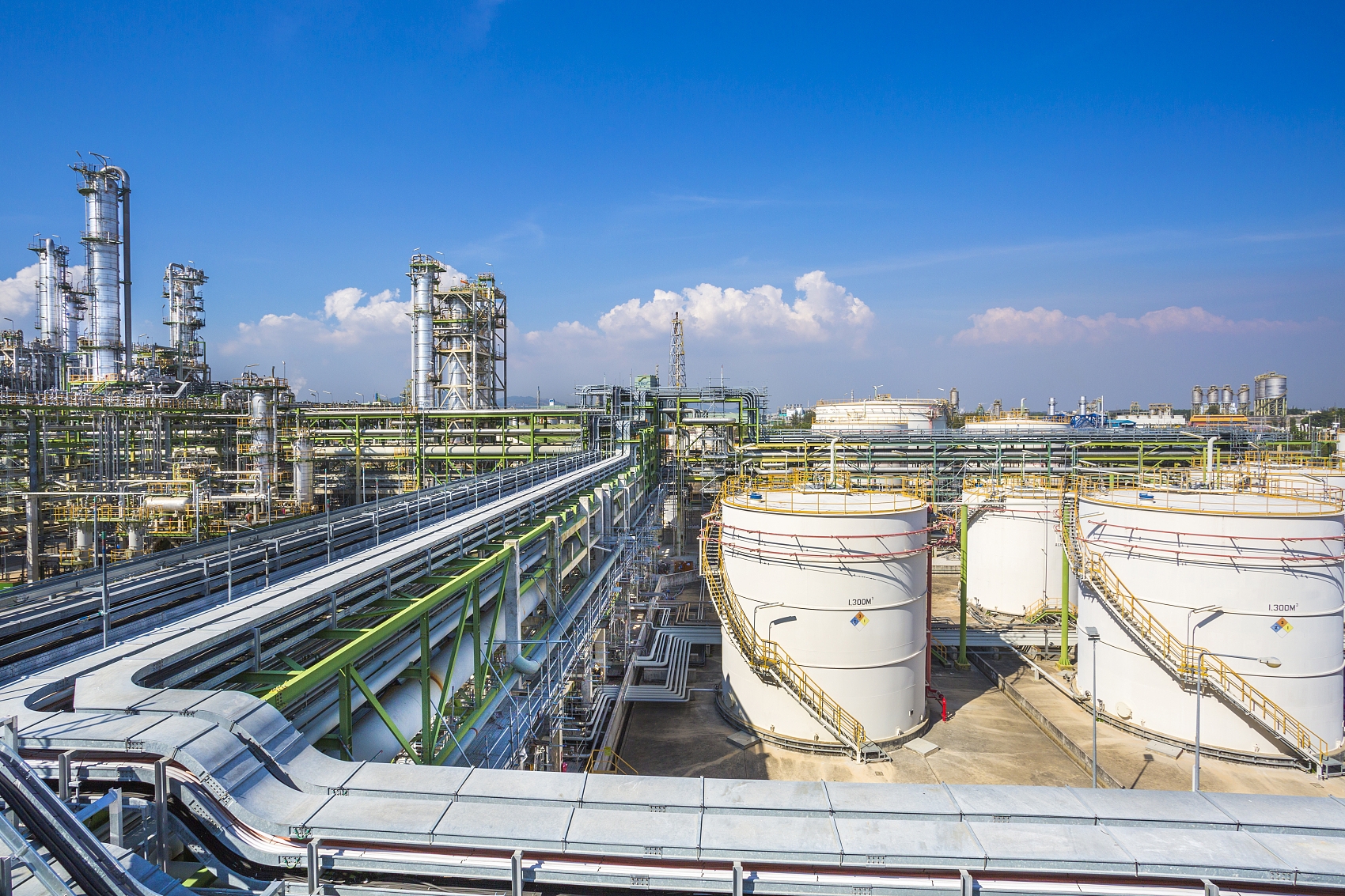
In the midstream storage and transportation links, petroleum explosion suppressants are widely used in oil storage tanks, oil tankers, pipelines and other facilities. Oil storage tanks, especially large-scale above-ground and underground storage tanks, are prone to generate flammable vapor-air mixtures, which may lead to explosions when exposed to open flames or high temperatures.
The application of these suppressants can effectively reduce the flammability and explosiveness of the mixture, and suppress the occurrence and development of explosions in the initial stage. In long-distance oil and gas pipelines, they are also used to protect key nodes such as pumping stations and valve chambers, preventing explosion accidents caused by pipeline leakage or overpressure.
They are also applicable to fuel transport vehicles, mobile refueling vehicles, airport refueling vehicles and other transportation equipment, providing explosion protection for their fuel tanks and ensuring the safety of the transportation process.
In the downstream refining and processing links, petroleum explosion suppressants are applied in refineries, petrochemical plants and other facilities. In the process of petroleum refining, a variety of flammable and explosive materials are involved, and the reaction conditions are often high temperature and high pressure, which brings great potential safety hazards.
These suppressants are used in reaction kettles, distillation towers, storage tanks and other key equipment to improve the safety of the production process and avoid catastrophic losses. They are also used in gas stations, gas filling stations and flammable and explosive chemical storage rooms related to petroleum products.
From the perspective of regional application, petroleum explosion suppressants are mainly concentrated in Asia, Europe and North America. These regions have mature petroleum industries and strict industrial safety regulations, which promote the wide application of such suppressants.
In recent years, with the economic development and urbanization in Asia, the demand for petroleum explosion suppressants in this region has continued to rise, and its proportion in the global market has been increasing steadily. Meanwhile, the application in the Middle East, Africa and other regions is also gradually expanding with the increase of local oil and gas exploration activities.
In terms of global market demand, the market volume of petroleum explosion suppressants has maintained a steady growth trend in recent years, driven by the recovery of the global economy and the increasing emphasis on industrial safety.
Although there are still many uncertainties in the economic development of major global economies, the overall recovery of the global economy has provided a favorable environment for the growth of the petroleum explosion suppressant industry. The market scale has been expanding year by year, and the demand volume has shown a continuous upward trend.
Regionally, the market demand in Asia, Europe and North America accounts for the main part of the global market. Among them, the Asian market has become an important growth engine due to the rapid development of its petroleum industry and the continuous improvement of safety standards.
The market demand in Europe and North America is relatively stable, supported by mature industrial systems and strict safety supervision. In addition, the demand for petroleum explosion suppressants in emerging markets such as the Middle East and Africa is also growing gradually, becoming a new growth point for the global market.
Looking forward to the future development trend of petroleum explosion suppressants, the industry will show a development direction of intelligence, environmental protection and high efficiency.
In terms of technology, the research and development of new petroleum explosion suppressants will be accelerated, and more efficient, environmentally friendly and economical products will be continuously launched. For example, new barrier explosion-proof materials with special structures have the advantages of good chemical inertness, heat and static conductivity, which can better meet the explosion-proof needs of various scenarios.
The application of intelligent technology will also become an important development trend. Intelligent explosion-proof systems integrated with early warning, detection and suppression functions will be more widely used, which can realize real-time monitoring of potential explosion risks and rapid response, further improving the level of safety protection.
In terms of market distribution, the global market pattern will gradually tilt towards emerging countries and regions. It is expected that the market share of the Asian region will continue to rise in the future, while the market share of Europe and North America will remain relatively stable or slightly decline.
The Middle East, Africa and other regions will gradually increase their influence in the global market with the acceleration of local industrialization and the expansion of the petroleum industry. The market competition will also become more intense, and enterprises will focus more on technological innovation and product upgrading to enhance their core competitiveness.
In addition, with the continuous improvement of global environmental protection requirements, environmentally friendly petroleum explosion suppressants will be more favored by the market. Products with low pollution, low toxicity and recyclability will gradually replace traditional products, becoming the mainstream of the market.
At the same time, the integration of explosion-proof technology with related industries will be further deepened, and customized explosion-proof solutions for different application scenarios will be more popular, providing more targeted safety protection services for the petroleum industry.